Mound of the Hostages, Tara
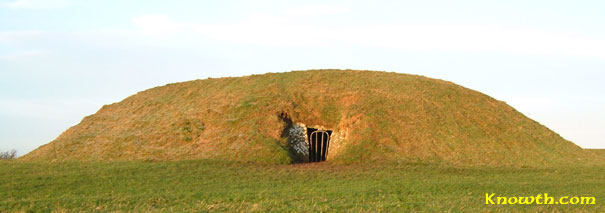 Mound of the Hostages, Tara.
The Mound of the Hostages (Dumha na nGiall) is the oldest visible monument on the Hill of Tara. The mound covers a passage tomb built 5,000 years ago (around 3,000 BC). It was used as a place to bury human remains for more than 1,500 years. The mound lies near the northern edge of a large enclosure called Ráith na Ríg (Fort of the Kings), which was built around 100 BC. The line of Ráith na Ríg was laid out so that the ancient mound would lie within it, thus respecting its importance. The Mound of the Hostages got its name in the medieval period because it was the place where the symbolic exchange of hostages took place.
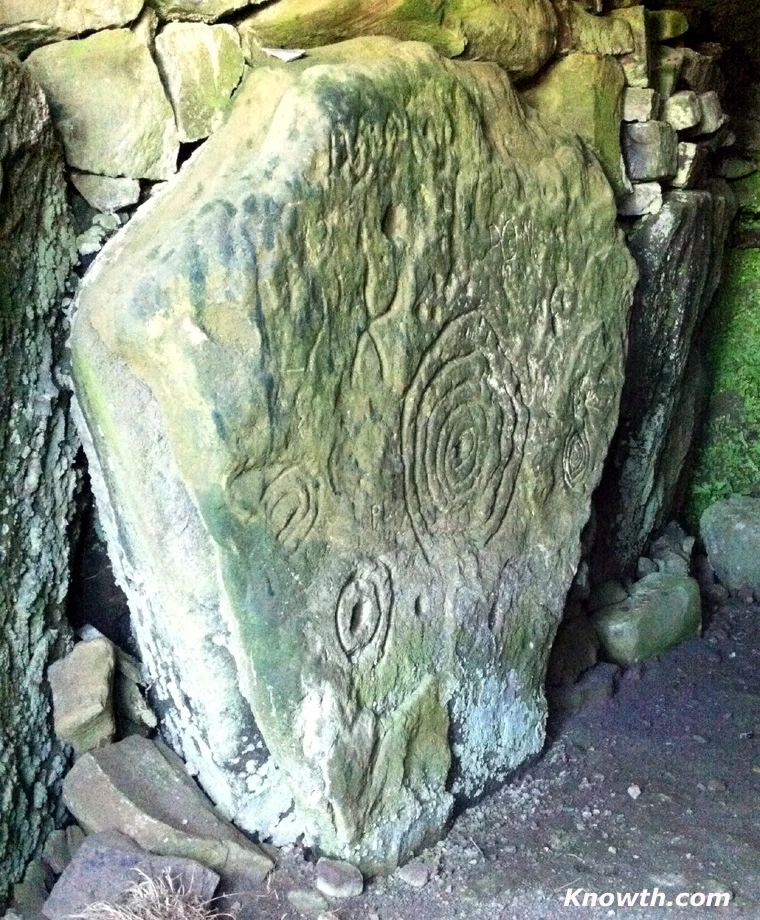 Megalithic art from the passage of the Mound of the Hostages on the Hill of Tara.
The Tara excavation project began in the early summer of 1952, directed by Seán P. Ó Ríordáin, Professor of Celtic Archaeology at University College Dublin. In 1956, after two seasons of excavation at the mound, Ó Ríordáin became ill. He died in 1957. His successor, Professor Ruaidhrí de Valera, completed the excavation of the Mound of the Hostages in 1959. Dr Muiris O'Sullivan completed the task of publishing the excavation Dumha na nGiall - The Mound of the Hostages in 2005.
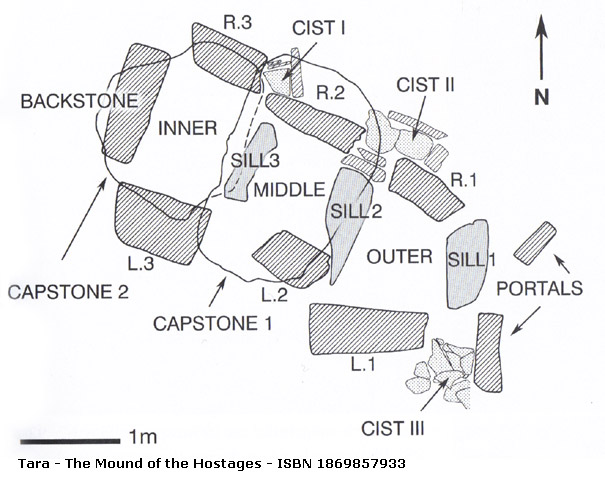 Plan of The Mound of the Hostages, Tara.
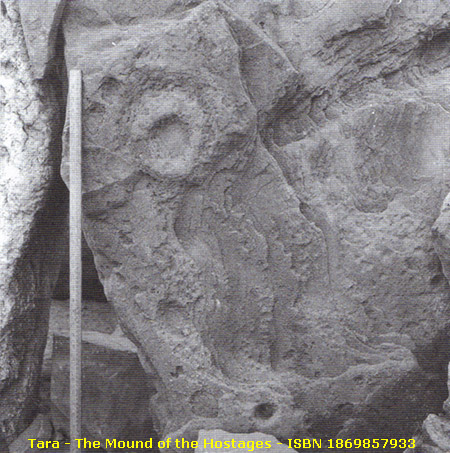 Orthostat R2, Mound of the Hostages, Tara.
Dumha na nGiall
Much of the modern understanding of the Mound of the Hostages comes from the archaeological excavation carried out between 1952 and 1959 and from later scholarly analysis of the monument, its burials and its megalithic art. The following works are considered the principal academic references on the tomb and its wider context within the Neolithic archaeology of Ireland.
Dumha na nGiall - The Mound of the Hostages (Muiris O'Sullivan, 2005)
The definitive archaeological report on the monument is Dumha na nGiall - The Mound of the Hostages, Tara by Muiris O'Sullivan. This volume presents the results of the excavations directed by Seán P. Ó Ríordáin and completed by Ruaidhrí de Valera. It documents the structure of the tomb, the decorated stones in the passage, and the extensive burial evidence recovered during the excavation.
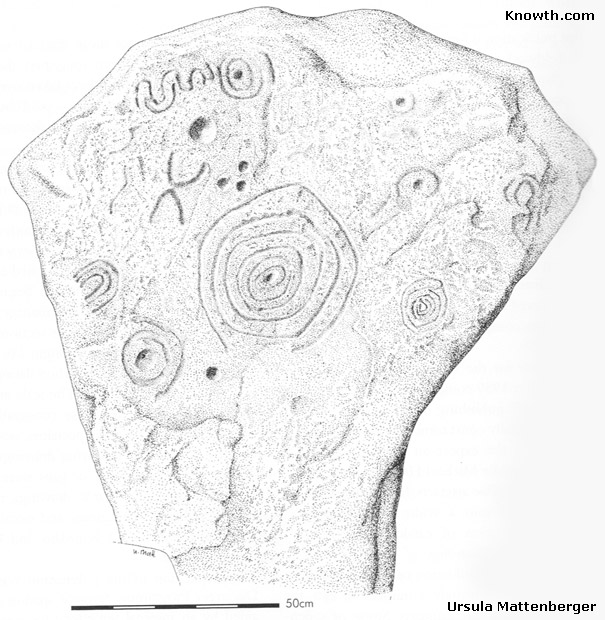 Decorated stone, orthostat L2, Mound of the Hostages, Tara.
Radiocarbon dates from the site indicate that the passage tomb was constructed around 3000 BC and remained in use for burial for more than fifteen centuries. The excavations revealed cremated and unburnt human remains as well as grave goods that show the continued importance of the monument into the Bronze Age.
Hill of Tara Archaeological Landscape
The Mound of the Hostages is only one element within the ceremonial landscape of the Hill of Tara. Later monuments such as the enclosure of Ráith na Ríg, the Lia Fáil and the great earthworks across the hill reflect Tara's importance as a political and ritual centre in later Irish tradition.
Archaeological research has shown that the Neolithic tomb long predates these later structures, demonstrating that Tara was already a significant place in the landscape thousands of years before it became associated with the High Kings of Ireland.