Knowth Kerbstone K96
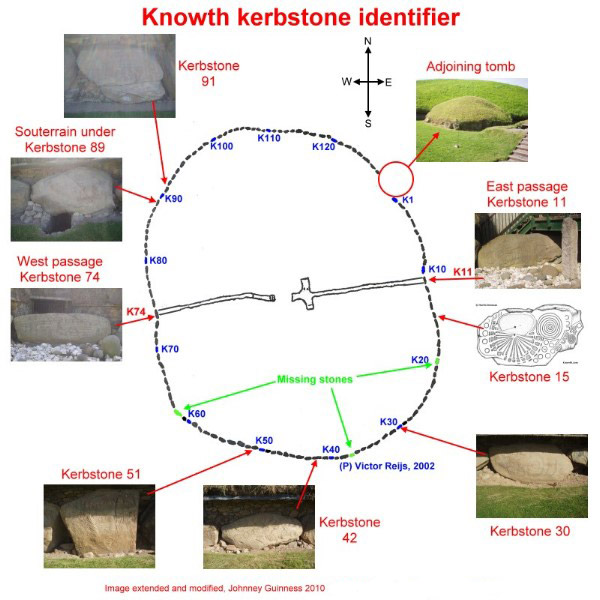
Kerbstone K96 is one of the 127 kerbstones numbered in Professor George Eogan's record of the Knowth monument. It is located on the north-western side of the great passage tomb mound.
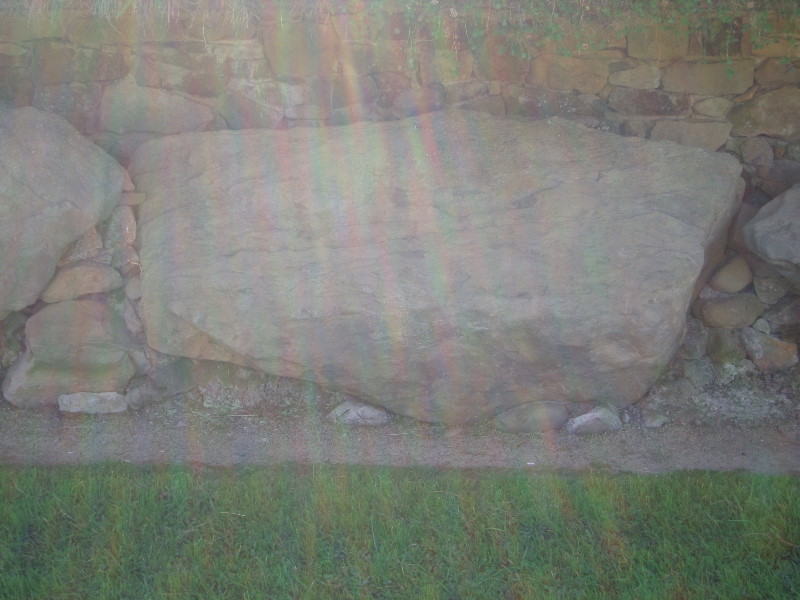 Knowth Kerbstone K96.
The Megalithic Art of the Passage Tombs at Knowth, Co. Meath
Excavations at Knowth Volume 7: The Megalithic Art of the Passage Tombs at Knowth, Co. Meath
The complex of passage tombs at Knowth is dated c. 3200-2900 BC, and this volume deals with one of the most significant aspects of the site. It presents a complete catalogue of the 390 recorded carved stones at Knowth, through descriptions, drawings and photographs.
Six main styles of art have been identified and these are discussed, together with the motifs and techniques employed. The Knowth carvings constitute c. 46% of all such art in Ireland, and the volume sets the Knowth art in the context of the other Irish carvings, those in western and northern Britain, and also the somewhat earlier art found on megalithic tombs in Atlantic Europe.
Purchase at Amazon.com or Amazon.co.uk. View or download at Digital Repository of Ireland.
Knowth Stone Age passage tomb
Kerbstone K96 is one of the stones encircling the Great Mound at Knowth, recorded in the numbered kerb sequence from K1 to K127. The kerb carvings are abstract rather than figurative, yet they are far from random. Repeated circles, crescents and flowing lines point to a shared symbolic world among the Boyne Valley builders, one that modern visitors can still sense when walking the numbered stones around the mound.
No other site preserves so much carved Neolithic stonework in one place. After conservation of the mound, visitors on guided tours can walk the full kerb circuit and see one of the greatest open-air collections of prehistoric art in Ireland.
Guided tours include the kerb circuit; the passages and chambers are not open to the public. The stones are numbered K1 to K127 following Professor George Eogan's excavation record, published in the Excavations at Knowth series by the Royal Irish Academy.
Professor George Eogan opened excavations at the Great Mound and its satellite tombs in 1962. Within five years the western passage and chamber had been found; work soon after revealed a second passage and an extraordinary body of carved stone that accounts for a large share of Neolithic art in western Europe.