Aerial photographs
Aerial views of the Boyne Valley passage tombs at Newgrange, Knowth, Dowth and Fourknocks, including Dowth Henge in the wider landscape.
Newgrange
Newgrange was built about 3200 BC. The kidney shaped mound covers an area of over one acre and is surrounded by 97 kerbstones, some of which are richly decorated with megalithic art. The 19 metre (62 ft) long inner passage leads to a cruciform chamber with a corbelled roof. It is estimated that the construction of the passage tomb at Newgrange would have taken a workforce of 300 at least 20 years. More about Newgrange.
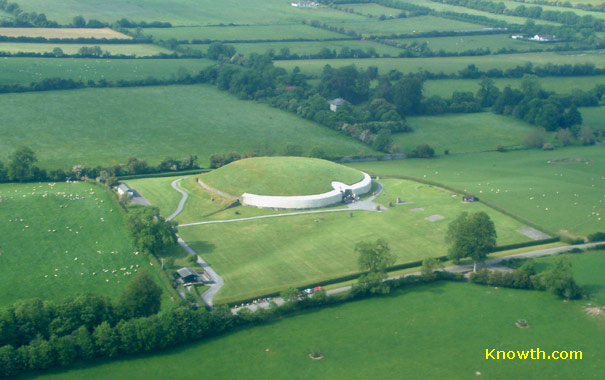 Newgrange megalithic passage tomb.
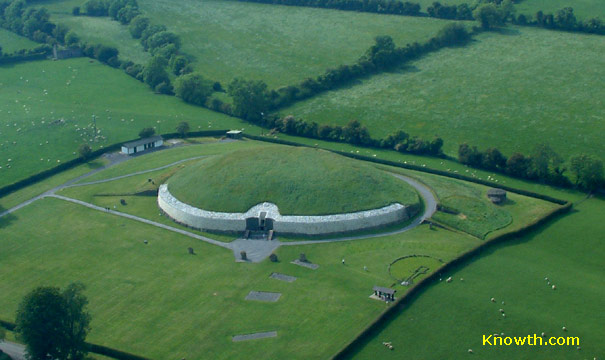 Newgrange megalithic passage tomb in the Boyne Valley.
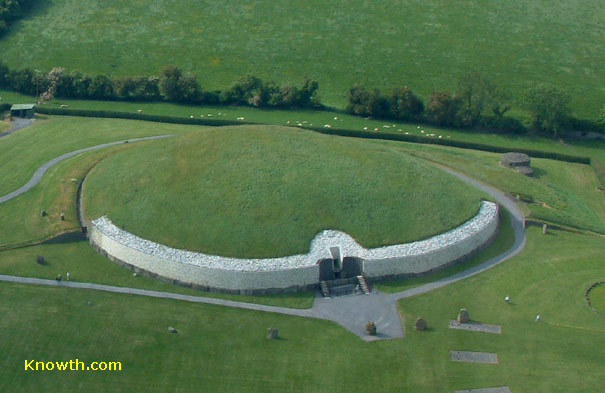 Newgrange megalithic passage tomb,
Ireland's Ancient East.
Newgrange megalithic passage tomb,
Ireland's Ancient East.
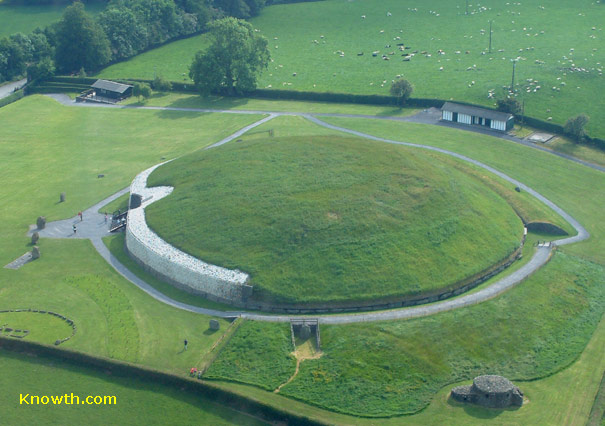 Newgrange, UNESCO World Heritage Site.
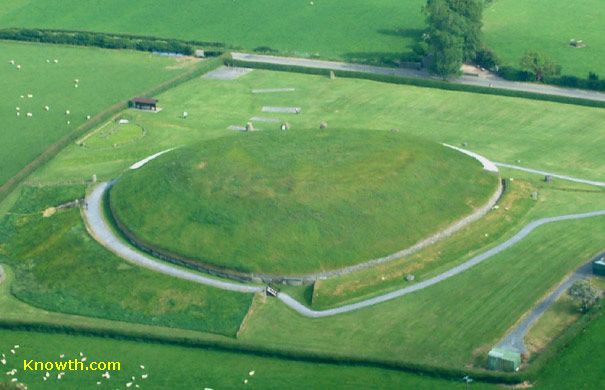 Newgrange prehistoric monument in County Meath.
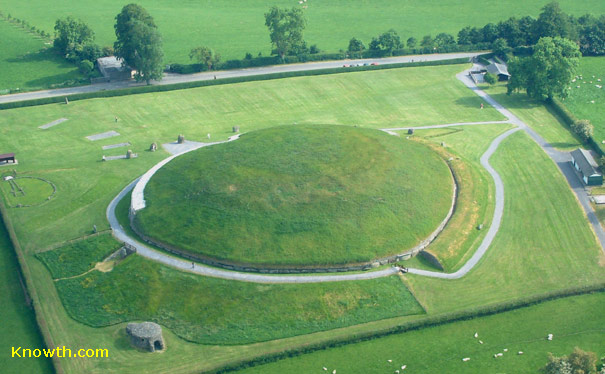 Newgrange is the best known Irish passage tomb and dates to about 3200 BC.
Knowth
Knowth was built over 5,000 years ago, around 3200 BC, during the same broad period as Newgrange and Dowth. The Great Mound at Knowth is larger than Newgrange in ground area and is surrounded by 19 smaller satellite mounds.
The Great Mound has two passages with entrances on opposite sides. The western passage is approximately 32 metres (105 feet) long, with the passage and chamber together extending over 34 metres (112 feet). The eastern passage is approximately 35 metres (115 feet) long and leads into a cruciform chamber, bringing the tomb's total length to over 40 metres (131 feet). More about Knowth.
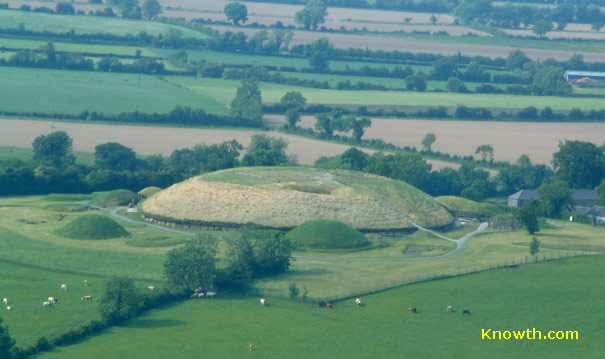 Knowth great mound and satellite tombs.
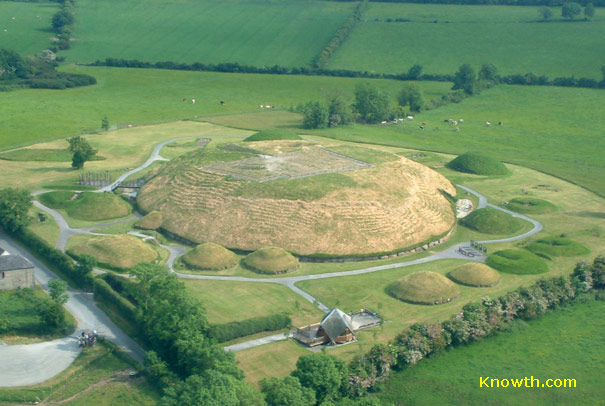 Knowth megalithic passage tomb,
Ireland's Ancient East.
Knowth megalithic passage tomb,
Ireland's Ancient East.
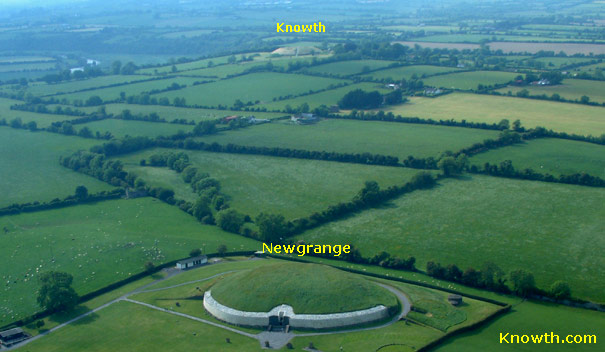 Newgrange with Knowth in the distance, Boyne Valley.
Dowth
Dowth, the Fairy Mound of Darkness, is about the same size as Newgrange and Knowth and was built in the same period over 5,000 years ago. The mound was subjected to a very unprofessional excavation in 1847. Two passage tombs were discovered, but the mound was severely damaged in the process. The passage tombs are much less spectacular than Newgrange or Knowth, with shorter passages and lower roofs. More about Dowth.
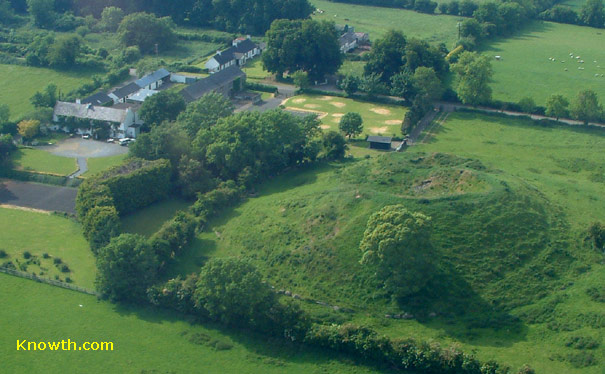 Dowth megalithic passage tomb.
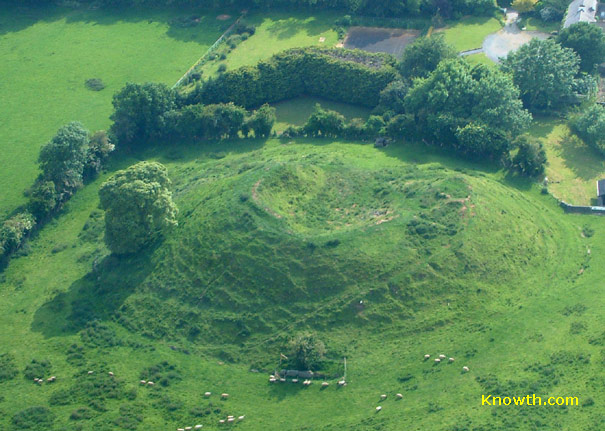 Dowth megalithic passage tomb,
Ireland's Ancient East.
Dowth megalithic passage tomb,
Ireland's Ancient East.
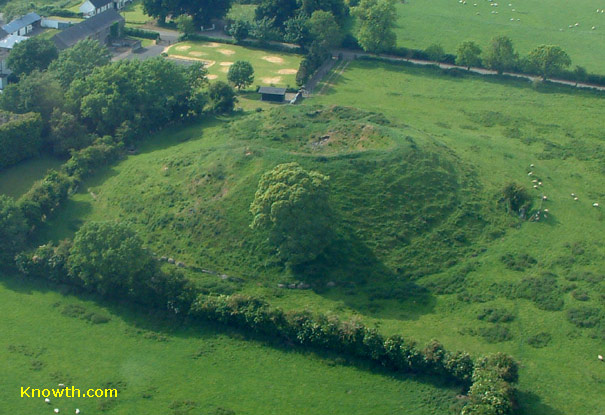 Dowth passage tomb mound.
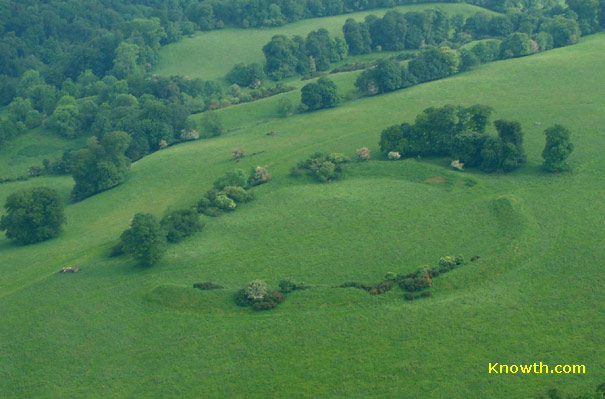 Dowth Henge, Boyne Valley.
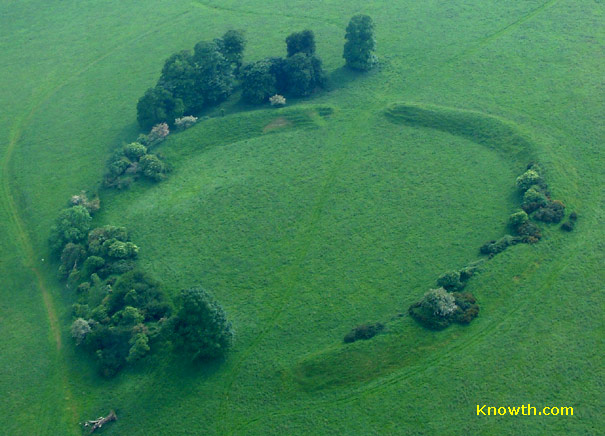 Dowth Henge,
Ireland's Ancient East.
Dowth Henge,
Ireland's Ancient East.
Fourknocks
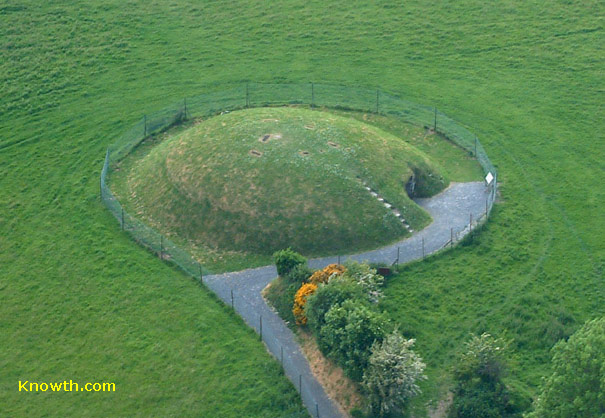 Fourknocks megalithic passage tomb,
Ireland's Ancient East.
Fourknocks megalithic passage tomb,
Ireland's Ancient East.
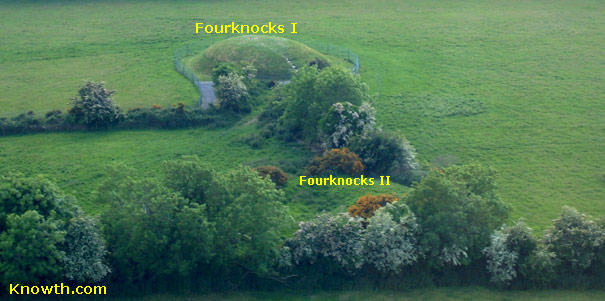 Fourknocks I and Fourknocks II.
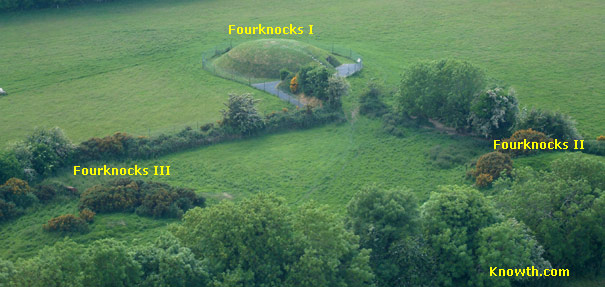 Fourknocks I, Fourknocks II and Fourknocks III.
More aerial images: Newgrange aerials, Newgrange helicopter photos, and Knowth aerials.