Garden Labyrinth
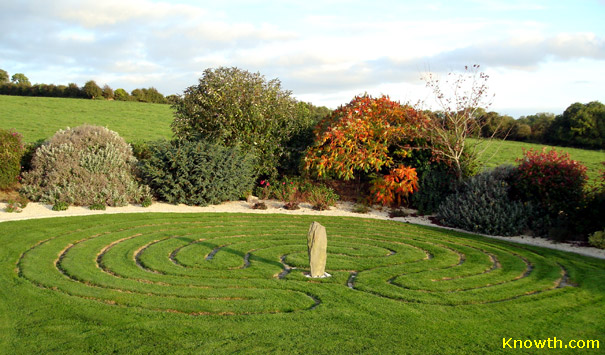 The garden labyrinth at sunset, with the standing stone casting a long shadow across the winding paths.
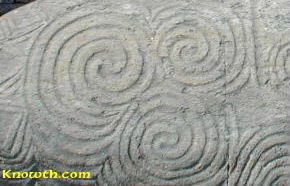 Spiral carving at Newgrange, the inspiration for the labyrinth.
The design is based on the classic seven-circuit labyrinth, one of the oldest and most recognisable labyrinth patterns in the world.
Unlike a maze, a labyrinth has a single winding path that leads to the centre and back out again, creating a route for contemplation and reflection.
Spiral carving at Newgrange, the inspiration for the labyrinth.
The design is based on the classic seven-circuit labyrinth, one of the oldest and most recognisable labyrinth patterns in the world.
Unlike a maze, a labyrinth has a single winding path that leads to the centre and back out again, creating a route for contemplation and reflection.
The central section was modified to eliminate all straight lines, taking inspiration from the flowing spiral motifs carved on the famous entrance stone at Newgrange. The result is a design that combines the traditional form of the classical labyrinth with elements of Ireland's prehistoric megalithic art, creating a symbolic link between an ancient walking pattern and the remarkable stone carvings of the Neolithic passage tomb builders.
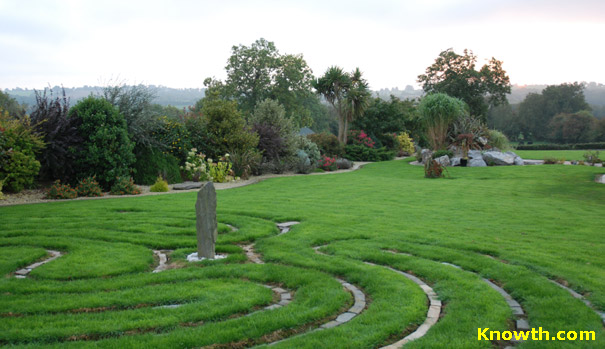 Looking west at sunset on an October evening.
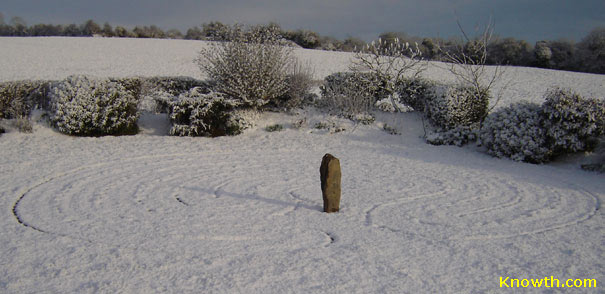 Labyrinth after a fall of snow, the only significant snow for the winter of 2005/2006.
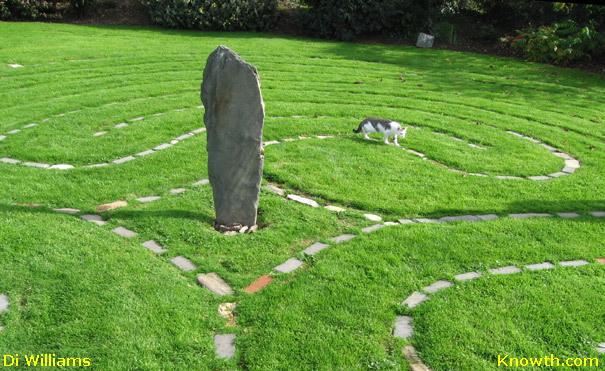 Holly the family cat, my regular companion when walking the labyrinth.
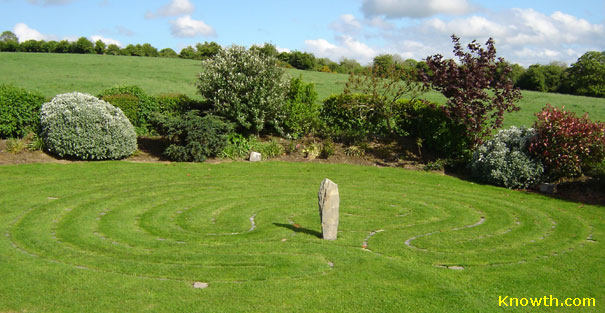 Garden Labyrinth with standing stone.
Garden Labyrinth with standing stone, the larger stones in the ground, at the front in the photograph, mark the setting sun at the winter solstice, equinox and summer solstice. Three stones on the east of the labyrinth, at the back in the photograph, mark the rising sun at the winter solstice, equinox and summer solstice.
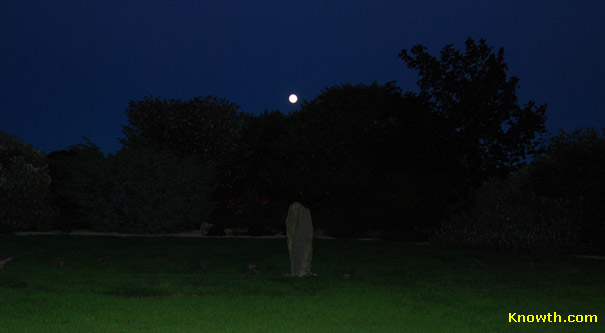 A full moon rising over the labyrinth, August 2010.
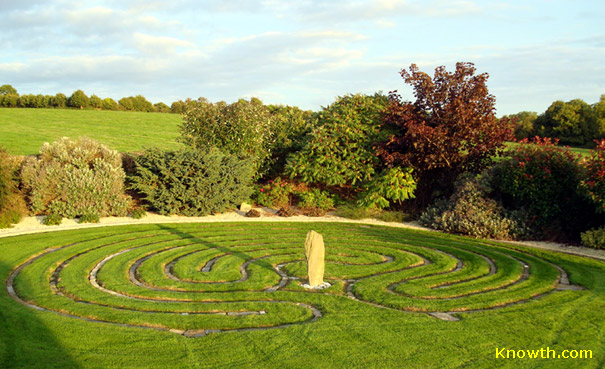 Labyrinth at sunset, September 2010.
The labyrinth is aligned on an east to west axis, so the shadow from the standing stone is nicely centred at sunset on the evenings around the spring and autumn equinox.
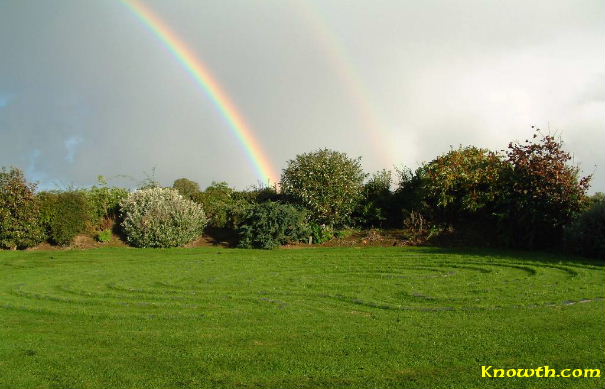 A double rainbow of red, orange, yellow, green, blue, indigo and violet.
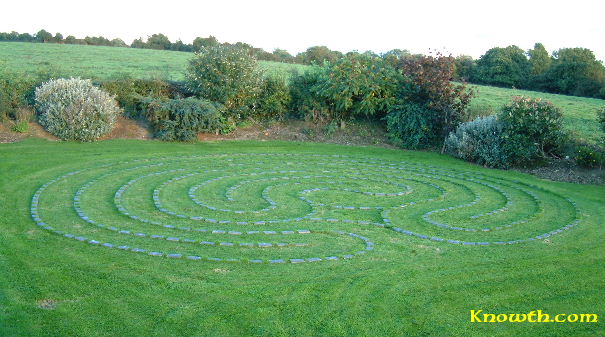 Garden Labyrinth with paving stones laid on the grass in 2004.
When the garden labyrinth was first constructed, the paving bricks were placed on the grass. Maintenance was time consuming, so the paving bricks were sunk to be flush with the ground.
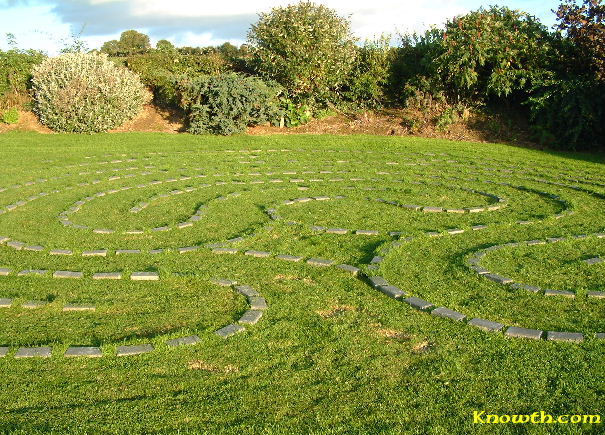 Close up of the labyrinth entrance.