Knowth Kerbstone K62
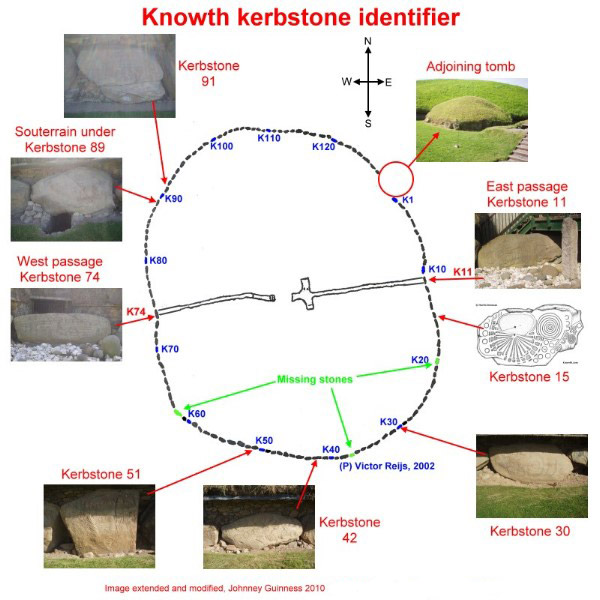
Kerbstone K62 is one of the 127 kerbstones numbered in Professor George Eogan's record of the Knowth monument. It is located on the south-western side of the great passage tomb mound, between Kerbstones K61 and K63. The stone is now missing and is one of only three kerbstones no longer surviving in the kerb.
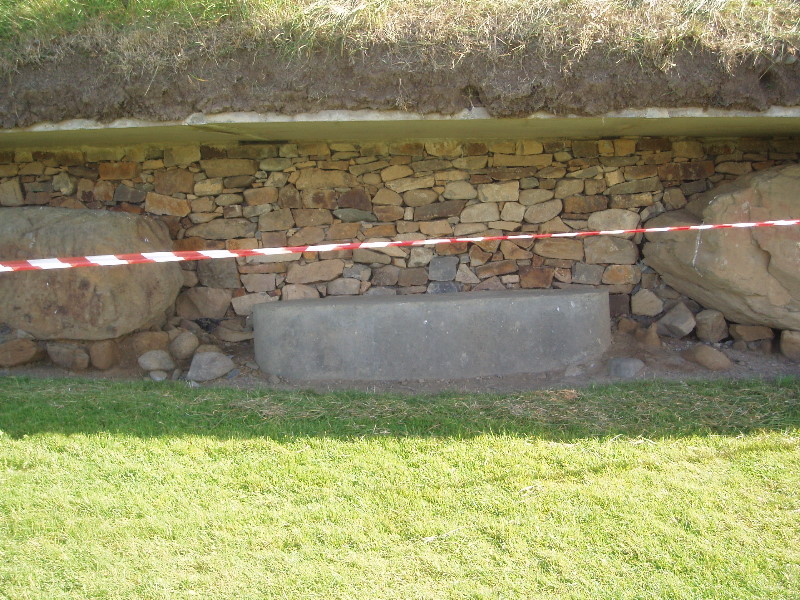 Knowth Kerbstone K62.
The Megalithic Art of the Passage Tombs at Knowth, Co. Meath
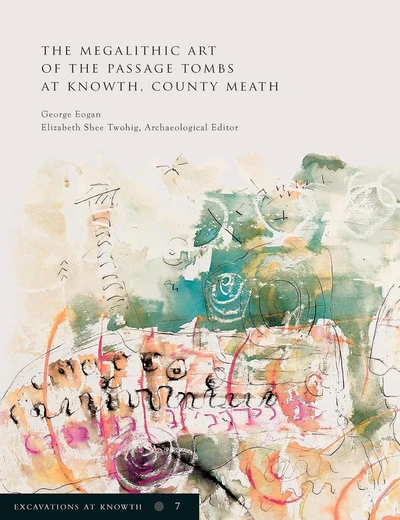
Excavations at Knowth Volume 7: The Megalithic Art of the Passage Tombs at Knowth, Co. Meath
The complex of passage tombs at Knowth is dated c. 3200-2900 BC, and this volume deals with one of the most significant aspects of the site. It presents a complete catalogue of the 390 recorded carved stones at Knowth, through descriptions, drawings and photographs.
Six main styles of art have been identified and these are discussed, together with the motifs and techniques employed. The Knowth carvings constitute c. 46% of all such art in Ireland, and the volume sets the Knowth art in the context of the other Irish carvings, those in western and northern Britain, and also the somewhat earlier art found on megalithic tombs in Atlantic Europe.
Purchase at Amazon.com or Amazon.co.uk. View or download at Digital Repository of Ireland.
Knowth Stone Age passage tomb
K62 forms part of the ceremonial kerb documented during decades of excavation at Brú na Bóinne by Professor George Eogan and his team. Guided tours include the kerb circuit; the passages and chambers are not open to the public. The stones are numbered K1 to K127 following Professor George Eogan's excavation record, published in the Excavations at Knowth series by the Royal Irish Academy.
Professor George Eogan opened excavations at the Great Mound and its satellite tombs in 1962. Within five years the western passage and chamber had been found; work soon after revealed a second passage and an extraordinary body of carved stone that accounts for a large share of Neolithic art in western Europe.
Decorated kerbstones were first recognised in quantity when R. A. S. Macalister cut an exploratory trench in 1941 and recorded fifty-eight kerbstones, most of them carved. His publication foreshadowed the fuller catalogue assembled during George Eogan's long campaign of excavation.
In sheer size Knowth rivals Newgrange. Building the mound demanded quarrying and moving thousands of tonnes of stone, shaping a ring of kerbstones, and fitting passages, chambers and cairn material into a carefully planned design that still impresses engineers and archaeologists today.