Knowth Kerbstone K32
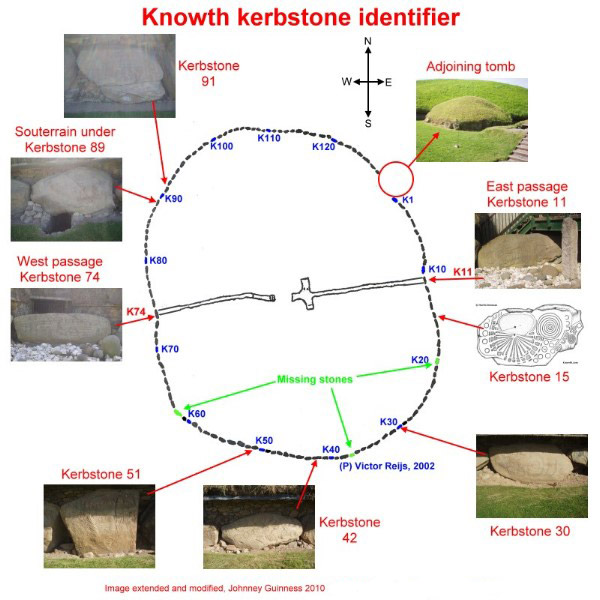
Kerbstone K32 is one of the 127 kerbstones numbered in Professor George Eogan's record of the Knowth monument. It is located on the southern side of the great passage tomb mound.
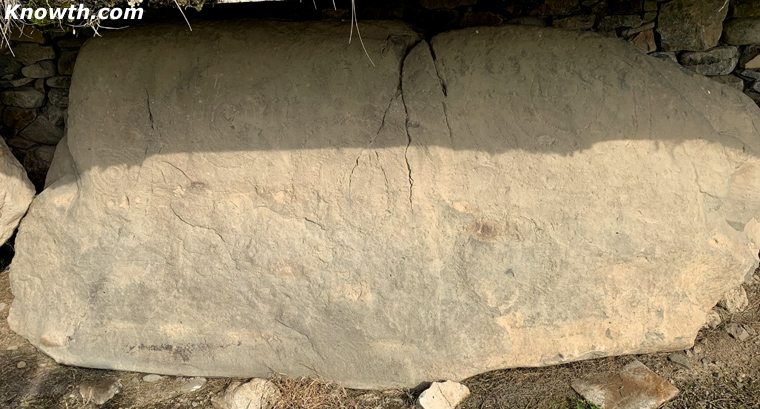 Knowth Kerbstone K32.
The Megalithic Art of the Passage Tombs at Knowth, Co. Meath
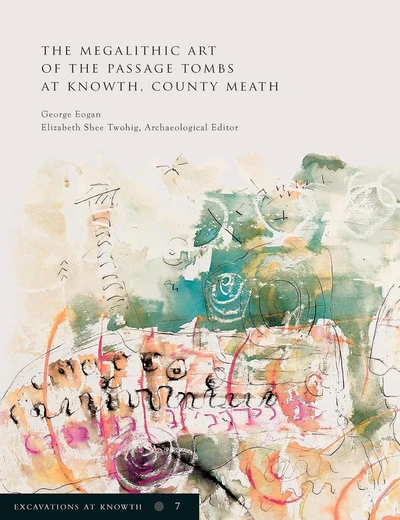
Excavations at Knowth Volume 7: The Megalithic Art of the Passage Tombs at Knowth, Co. Meath
The complex of passage tombs at Knowth is dated c. 3200-2900 BC, and this volume deals with one of the most significant aspects of the site. It presents a complete catalogue of the 390 recorded carved stones at Knowth, through descriptions, drawings and photographs.
Six main styles of art have been identified and these are discussed, together with the motifs and techniques employed. The Knowth carvings constitute c. 46% of all such art in Ireland, and the volume sets the Knowth art in the context of the other Irish carvings, those in western and northern Britain, and also the somewhat earlier art found on megalithic tombs in Atlantic Europe.
Purchase at Amazon.com or Amazon.co.uk. View or download at Digital Repository of Ireland.
Knowth Stone Age passage tomb
Kerbstone K32 is one of the stones encircling the Great Mound at Knowth, recorded in the numbered kerb sequence from K1 to K127. Twin passages at Knowth face broadly east and west. Older ideas that they targeted equinox sunrises and sunsets have given way to wider interpretations that allow both solar and lunar observation, and perhaps calendrical counting, among the motives of the builders.
The passage tombs of the Boyne were designated a UNESCO World Heritage Site in 1993. Knowth, Newgrange and Dowth together represent one of the richest prehistoric landscapes in Europe, valued for their age, scale and megalithic art.
The central cairn is accompanied by 19 satellite mounds. Knowth holds roughly a quarter of all recorded megalithic art in western Europe, with two major passages and decades of scientific excavation behind the story told today.
Knowth was raised more than five thousand years ago in the Neolithic period, around 3200 BC, when established farming communities were shaping the Boyne Valley. Together with Newgrange and Dowth, it forms the heart of the Brú na Bóinne World Heritage landscape.