Knowth Kerbstone K117
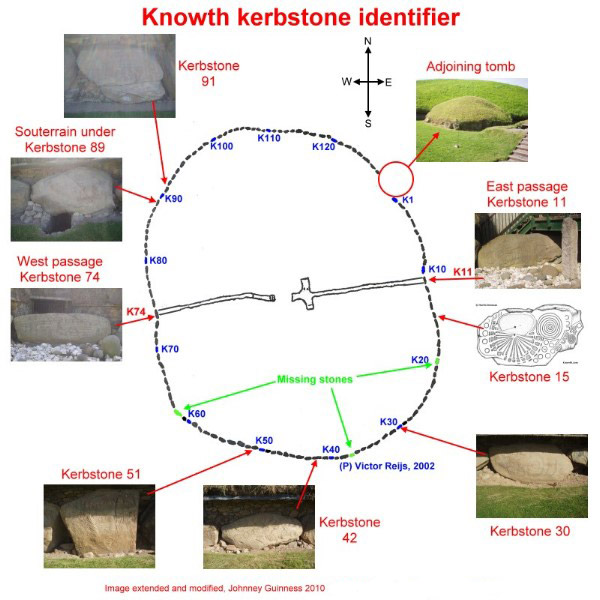
Kerbstone K117 is one of the 127 kerbstones numbered in Professor George Eogan's record of the Knowth monument. It is located on the northern side of the great passage tomb mound.
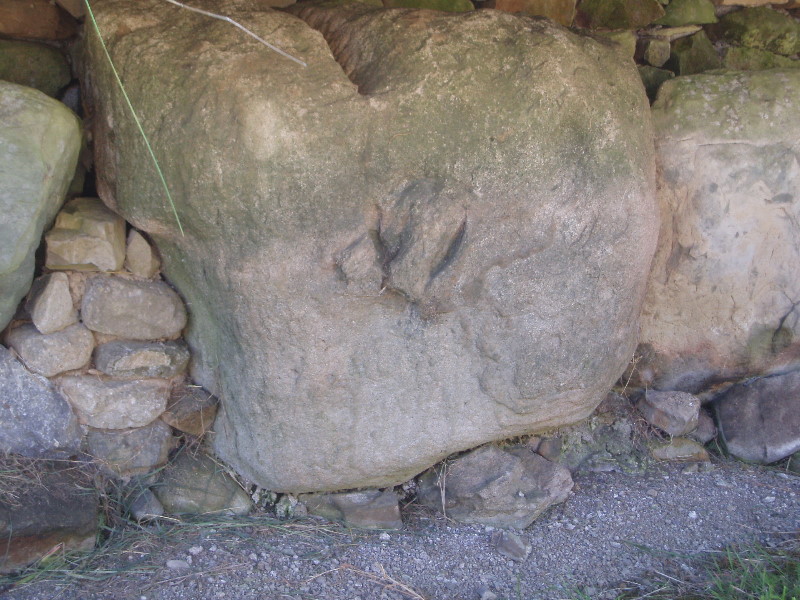 Knowth Kerbstone K117.
The Megalithic Art of the Passage Tombs at Knowth, Co. Meath
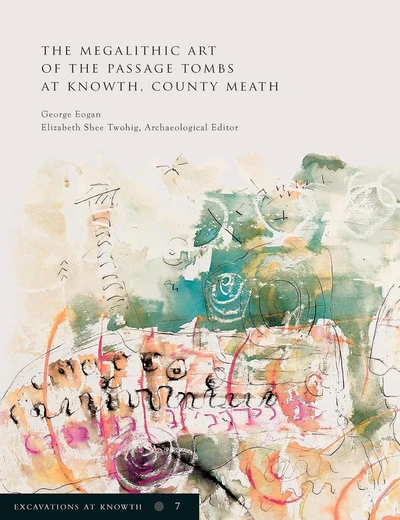
Excavations at Knowth Volume 7: The Megalithic Art of the Passage Tombs at Knowth, Co. Meath
The complex of passage tombs at Knowth is dated c. 3200-2900 BC, and this volume deals with one of the most significant aspects of the site. It presents a complete catalogue of the 390 recorded carved stones at Knowth, through descriptions, drawings and photographs.
Six main styles of art have been identified and these are discussed, together with the motifs and techniques employed. The Knowth carvings constitute c. 46% of all such art in Ireland, and the volume sets the Knowth art in the context of the other Irish carvings, those in western and northern Britain, and also the somewhat earlier art found on megalithic tombs in Atlantic Europe.
Purchase at Amazon.com or Amazon.co.uk. View or download at Digital Repository of Ireland.
Knowth Stone Age passage tomb
Stone K117 belongs to the kerb ring that defines the oval footprint of the Knowth passage tomb in the Boyne Valley. The first farmers reached the Boyne Valley around six thousand years ago, probably travelling by river. They cleared woodland, cultivated wheat and barley on rich soils, and kept herds of cattle, sheep, pigs and goats before committing enormous communal labour to the great tombs.
The great tombs were laid out as part of a deliberate ceremonial setting above a bend in the River Boyne. Knowth occupies rising ground with wide views across the valley, placing it firmly within a prehistoric landscape that later tradition remembered as Brú na Bóinne, the royal seat of the Boyne.
Carvings on the end stone of the eastern passage have been interpreted as a schematic map of the moon's surface, among the earliest attempts anywhere to record the appearance of the lunar maria. Other motifs on the site may relate to eclipses and to the interplay of sun and moon in Neolithic reckoning.
Iron Age people buried their dead near the mound and built a substantial ring-fort settlement beside it, reusing a site that already carried great prestige. Later medieval farmers enclosed the summit within a grange, leaving traces still visible from the air.