The Celts: Search for a Civilisation
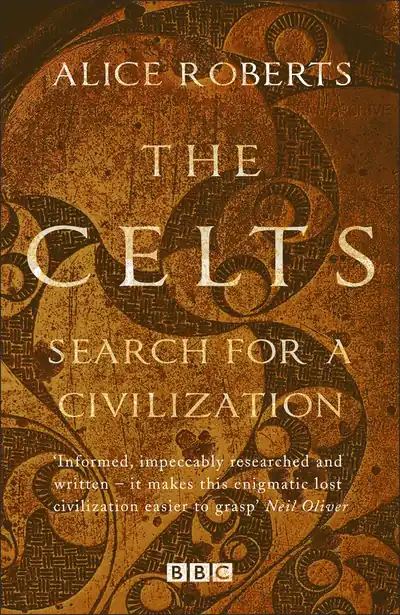
The Celts: Search for a Civilisation by Alice Roberts explores the origins, achievements and enduring influence of Celtic peoples. Accompanying the BBC television series, it takes readers across Europe to examine the evidence behind a familiar but often misunderstood name.
Purchase at Amazon.com or Amazon.co.uk.
A connected ancient world
Roberts presents a varied cultural world linked by language and the movement of ideas. Art, technology and treasured objects reveal connections across the continent, offering a richer picture than the stereotype of the Celts as simply warriors on the edges of the Roman world.
The Celts and Rome
The book also follows the long encounter between Celtic societies and Rome. Conflict and cultural influence form part of a story that helped shape Europe, while the surviving evidence invites readers to reconsider how these ancient peoples lived and how they have been remembered.
Celtic Timeline
BC
- 4500: Approximate beginning of the Neolithic in Britain, with farming adopted alongside hunting and gathering, and the first pottery
- 3200: Approximate beginning of the Bronze Age in Europe, with metalworking in the Aegean; earliest writing appears in the form of pictograms
- 2500: Approximate beginning of Bronze Age in Britain and Ireland
- 2300: Amesbury archer buried near Stonehenge
- 2200: Completion of Stonehenge (approx.)
- 2000: Domestication of the horse (approx.)
- 1800: First large-scale copper mines dug in Britain
- 1800–1500: Early precursors of alphabetic script appear in Bronze Age inscriptions in Egypt and Palestine
- 1500: Metal hoards appear in Britain and Ireland
- 1400: Gold bar torcs originate in Ireland
- 1300: Approximate beginning of Urnfield culture in central Europe
- 1200: Phoenician alphabet develops
- 1200: Iron production starts in Anatolia
- 1200–1150: Late Bronze Age collapse in the Eastern Mediterranean region. This is also the period which forms the setting of the Iliad and the Odyssey epic poems, written down some four centuries later
- 1200–1000: Bronze Ballintober swords manufactured in the British Isles
- 1100: Increasing use of iron across Europe
- 800: Approximate date for the composition of the Iliad and the Odyssey
- 800: Approximate date of the transition from Bronze to Iron Age in central and western Europe; gradual phasing in of the use of iron between 800 and 500 BC in the British Isles
- 753: Traditional date for the founding of Rome
- 750: Urnfield culture replaced by Hallstatt culture (approx.)
- 740: Greek script develops from Phoenician script
- 700–600: Earliest Tartessian inscriptions in southwest Portugal
- 700–600: Etruscans and Greeks establish trading posts in Mediterranean – including Greek colony of Massalia
- 653: Rise of Persian Empire
- 650: Land along the Danube becomes increasingly heavily farmed with irrigation channels dug in the area of Heuneburg
- 600: Mud-brick walls built at Heuneburg
- 583: Bettelbühl Princess buried
- 540: Destruction of the mud-brick walls at Heuneburg
- 530–500: Hecataeus of Miletus pens his Periegesis highlighting the Celtic cities of the Mediterranean
- 500: Transition from Hallstatt to La Tène culture in central Europe
- 500–400: Glauberg Prince burial
- 499–449: Persian wars with the Greeks
- 470/469: Birth of Socrates
- 450–400: Heuneburg fort abandoned, also Mont Lassois and Burgundy
- 430–400: Herodotus writes his Histories
- 387: Celts, led by Brennus, sack Rome
- 338: Greece under Macedonian rule
- 336: Alexander becomes king of Macedonia
- 335: Alexander the Great receives Celtic ambassadors in the Balkans
- 334: Celts and Romans sign treaty of Senones in northern Italy
- 331: Alexander the Great defeats Darius III of Persia in the Battle of Gaugamela, completing his conquest of Persia
- 325: Pytheas of Massalia voyages to Britain
- 323: Death of Alexander the Great at Babylon
- 300–200: Traditional date for the manufacture of the Gundestrup cauldron (though recent analysis suggests it may date to as late as 300 AD)
- 280: Celts ally with Thracians and attack Macedonians
- 278: King Nichomedes I of Bithynia encourages Celts to settle in Galatia in Turkey
- 277: Four thousand Celtic mercenaries employed by Ptolemy II of Egypt
- 263: First Punic War between Rome and Carthaginian army including 3,000 Celts
- 233: King Attalus I of Pergamum commissions the statue of The Dying Gaul (later copied by the Romans) to commemorate his victory over the Galatians
- 217: Hannibal’s invasion of Italy, with an active alliance from the Celts
- 202: Scipio Africanus defeats Hannibal at Battle of Zama
- 189: Manlius’ campaign against the Galatians and the destruction of Gordion
- 149–146: Third Punic War between Rome and Carthage, ending with the Sack of Carthage
- 146: The Greek historian Polybius writes his Histories (approx.)
- 146: The Battle of Corinth and the Roman conquest of Greece
- 129: Roman conquest of Turkey
- 121: Roman armies enter Gaul for the first time
- 75: Approximate date for the burial of the Snettisham Hoard
- 55–54: Julius Caesar’s expeditions to Britain
- 52: Battle of Alesia, Romans defeat Gaulish army of Vercingetorix and end of Celtic dominance of western Europe
- 30: Approximate date when Livy starts his History of Rome
AD
- 23–24: The Greek geographer Strabo finishes writing his Geography
- 43: Roman invasion of Britain, led by Claudius
- 60–61: Boudican revolt
- 128: Hadrian’s Wall completed
- 300–400: Earliest Irish writings in the form of Ogham inscriptions
- 383: Roman troops withdrawn from the north and west of Britain
- 410: Traditional date for the end of Roman rule in Britain as Emperor Honorius rejects British request for military assistance to resist Germanic attacks, and Rome is sacked by the Germanic Visigoths
- 519: Cerdic crowned the first Anglo-Saxon king of Wessex, according to the Anglo-Saxon Chronicle
- 1100: The first known copy of the Irish Book of the Dun Cow
- 1350–1410: The White Book of Rhydderch and the Red Book of Hergest – earliest Welsh manuscripts containing the stories of the Mabinogion
About Alice Roberts
Alice Roberts is an anatomist, osteoarchaeologist, anthropologist, author and broadcaster. Her work brings scientific approaches to the study of people and the past to a wide audience.
Purchase The Celts: Search for a Civilisation at Amazon.com or Amazon.co.uk.