Knowth Kerbstone K98
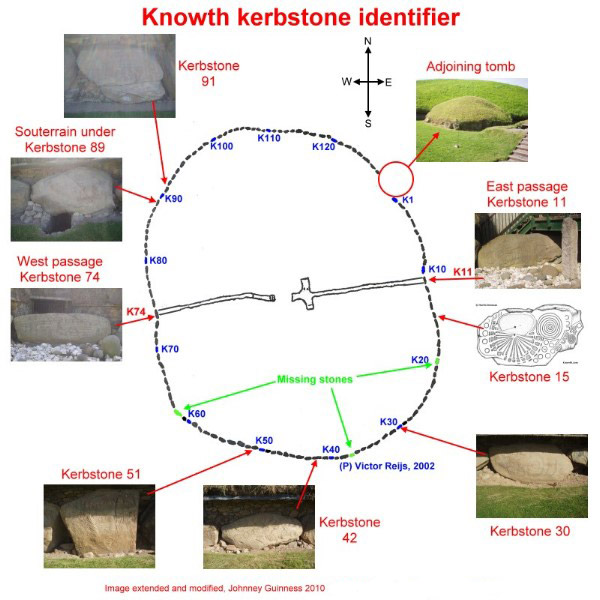
Kerbstone K98 is one of the 127 kerbstones numbered in Professor George Eogan's record of the Knowth monument. It is located on the north-western side of the great passage tomb mound.
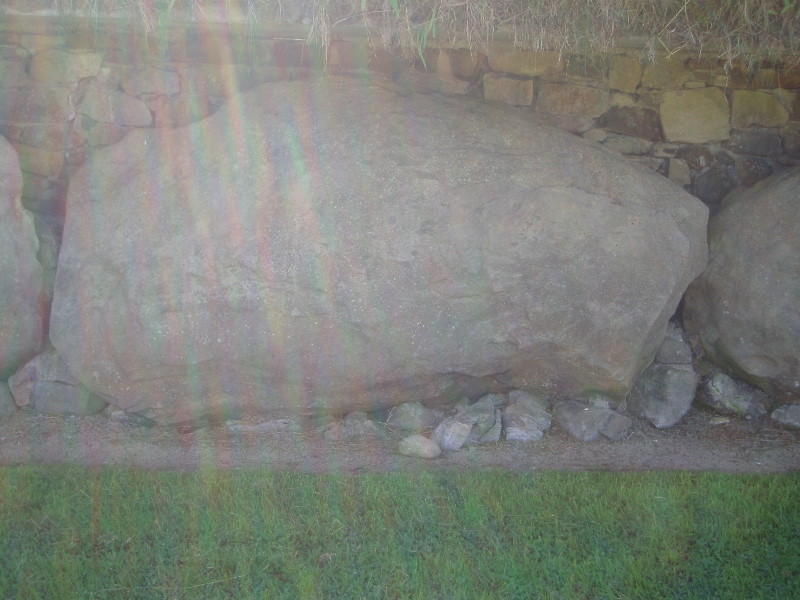 Knowth Kerbstone K98.
The Megalithic Art of the Passage Tombs at Knowth, Co. Meath
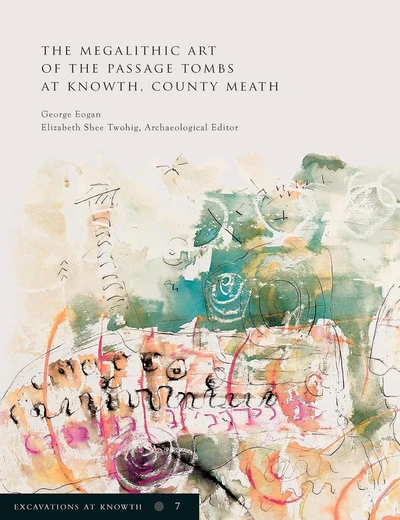
Excavations at Knowth Volume 7: The Megalithic Art of the Passage Tombs at Knowth, Co. Meath
The complex of passage tombs at Knowth is dated c. 3200-2900 BC, and this volume deals with one of the most significant aspects of the site. It presents a complete catalogue of the 390 recorded carved stones at Knowth, through descriptions, drawings and photographs.
Six main styles of art have been identified and these are discussed, together with the motifs and techniques employed. The Knowth carvings constitute c. 46% of all such art in Ireland, and the volume sets the Knowth art in the context of the other Irish carvings, those in western and northern Britain, and also the somewhat earlier art found on megalithic tombs in Atlantic Europe.
Purchase at Amazon.com or Amazon.co.uk. View or download at Digital Repository of Ireland.
Knowth Stone Age passage tomb
K98 forms part of the ceremonial kerb documented during decades of excavation at Brú na Bóinne by Professor George Eogan and his team. Detailed survey work on the orientation of the two passages has shown that simple equinox sunrise and sunset alignments do not fully explain their layout. The architecture may reflect a broader interest in seasonal and lunar cycles rather than a single astronomical event.
Few Irish passage tombs combine entrance kerb art with a full decorated kerb ring. Knowth belongs to that rare group, along with Newgrange and Dowth South, and includes some of the most elaborate rayed and arc motifs in the country.
One hundred and twenty-four kerbstones still ring the base of the Great Mound, which is 95 metres (312 feet) across at its widest point. Many carry carved spirals, lozenges, concentric circles and other abstract motifs that can be viewed on a circuit of the mound (kerbstone gallery).
Roughly half of all Irish passage-tomb art and about a third of the megalithic art of Europe comes from Knowth. The carvings share a distinctive Boyne Valley style that links kerb, passage and chamber stones into a single artistic tradition (Excavations at Knowth Volume 7).