Ireland: Standing Stones to Stormont
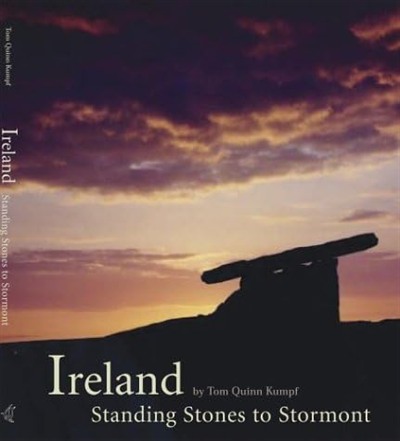
Ireland: Standing Stones to Stormont by Tom Quinn Kumpf, a photographic study of the ancient sites of Ireland with notes by the author of events and experiences he had while working on the project. As the photographer and writer, Tom has been to Ireland countless times. The book is made up mostly of ancient sites - stone circles, ring forts, standing stones, with specific attention paid to places like Newgrange, Knowth, Carrowkeel, and other locations where many of the ancient stories and legends were born. Purchase at Amazon.com or Amazon.co.uk
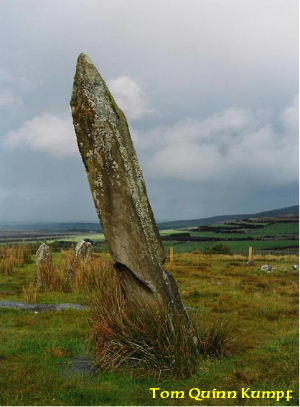 Knocknakilla stone circle, County Cork.
Ireland: Standing Stones to Stormont focuses on Irish identity and how the Irish understand their relationship with a landscape shaped by an ancient, active past. The Otherworld is still significant and close to the surface in the lives of the people. This spirit realm is separated from the world of men by the thinnest of veils, and the Irish, even those who profess total disbelief, still respond to the rhythms of everyday life as if respect for the Good People, or Fairy Folk, is a fundamental part of living.
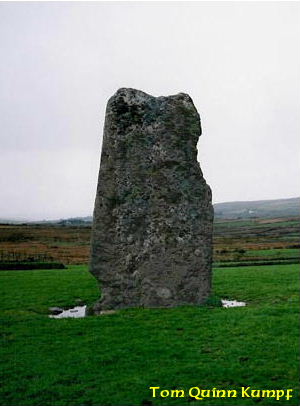 Kilmacowen standing stone, County Cork.
Tom's Inspiration for Ireland: Standing Stones to Stormont were the myths and legends he heard while working on another project in Belfast. Stories of Tuatha de Danaan, the ancient gods that eventually became the fairies. The Tuatha de Danaan were wizards who came from the air, they ruled Ireland until the Milesians (Celts) defeated them in battle and drove them underground to become fairies.
Tom Quinn Kumpf grew up in an Irish neighbourhood of Pittsburgh, Pennsylvania. Tom's ancestors are from Kilfenora in County Clare where he based himself when working on the book. He takes us back 5,000 years and shows how the ancient sites are actually how people identify with the land and with themselves.
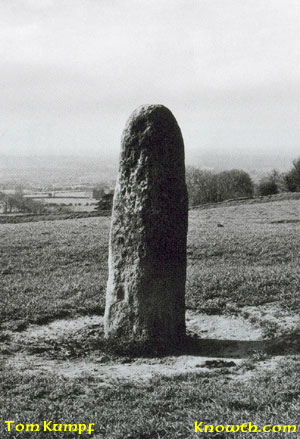 The Lia Fáil on the Hill of Tara.
Teamhair is the ancient name given the Hill of Tara, one of the most religious and revered
sites in all of Ireland.
The Lia Fáil on the Hill of Tara.
Teamhair is the ancient name given the Hill of Tara, one of the most religious and revered
sites in all of Ireland.
Tom's photography has appeared in publications and in exhibitions throughout the US, Europe, and the former USSR. He works primarily in Documentary, Travel, and Portrait Photography, teaches photo workshops, is a consultant for photo projects and exhibitions, and leads photo safaris in East Africa, the Americas, Ireland, and other exotic places.