The caves at Newgrange excavated
Historic photographs of Newgrange from the nineteenth century through to the early 1960s excavations, with a newspaper report from 1928 on work around the mound.
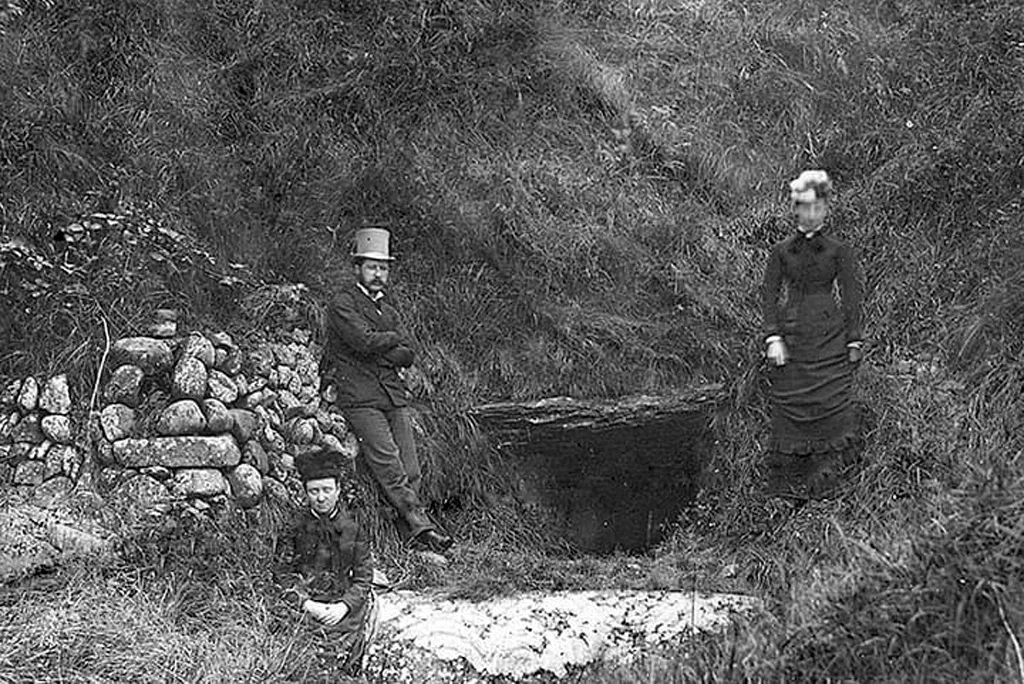 Old photograph of the Newgrange entrance from the 1800s.
Source:
Newgrange through the ages.
Old photograph of the Newgrange entrance from the 1800s.
Source:
Newgrange through the ages.
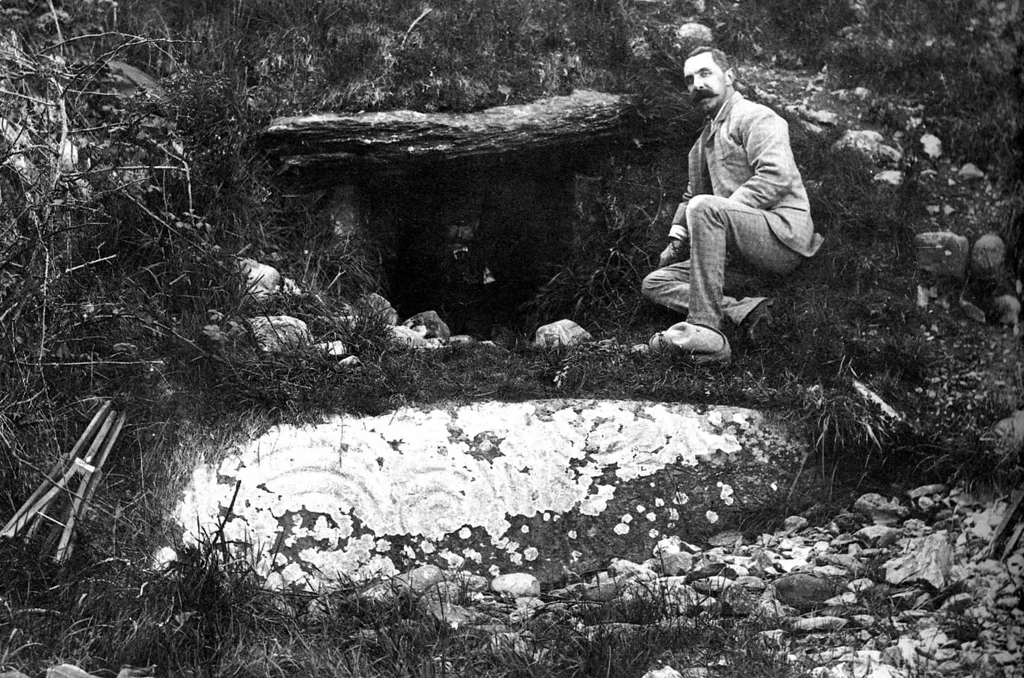 Newgrange in the late 1800s, before the later clearance and restoration of the facade.
Source:
Newgrange through the ages.
Newgrange in the late 1800s, before the later clearance and restoration of the facade.
Source:
Newgrange through the ages.
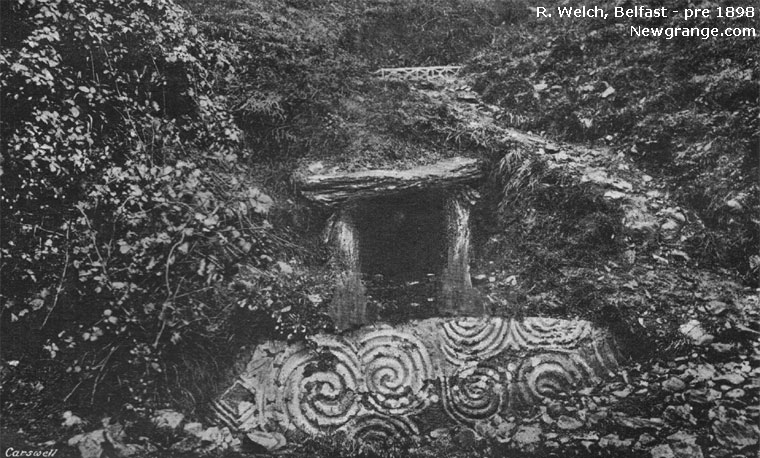 Newgrange entrance before 1898, photograph by R. Welch of Belfast, from the travel guide
Vale of the Boyne.
Newgrange entrance before 1898, photograph by R. Welch of Belfast, from the travel guide
Vale of the Boyne.
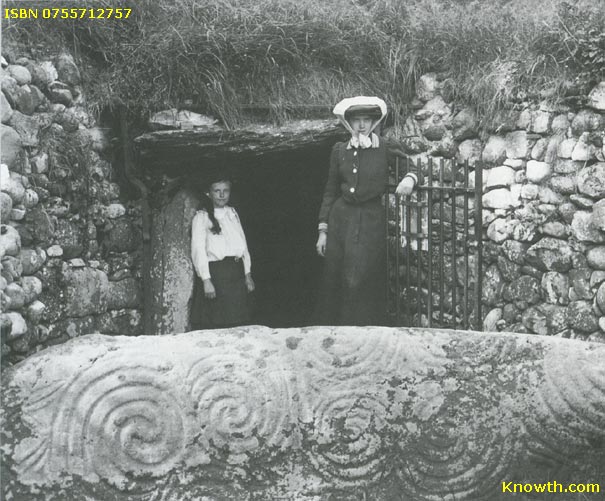 Newgrange entrance in the early twentieth century, with visitors at the gated doorway.
Report from the Drogheda Independent, 14 July 1928
Archaeological excavations and investigations are at present in the course of progress at the Caves of Newgrange near Drogheda, that strange and ancient tomb in which legend tells us the Kings of Ireland were buried as long ago as 1500 BC.
Newgrange as archaeologists know is the largest tumulus in Europe, Egypt being the only other place where monuments of similar antiquity are to be found. The present investigation is being carried on under the direction of that eminent archaeologist, Professor Macalister, and consists of digging about the base of the tumulus. This work has so far revealed oblong stones on which ancient and unfortunately undecipherable patterns and markings are worked in spiral, lozenge and other forms. One stone now resting on wooden supports has had all these patterns worked on it.
Plans have also been made, we understand, to cut down the trees growing on top of the mound, as their roots have become dangerous to the ceiling of the tumulus and which it is feared have already damaged the chambers and corridors that are thought to exist but have never yet been opened. The further progress of work will be followed with interest by those with a penchant for probing into the secrets of the past.
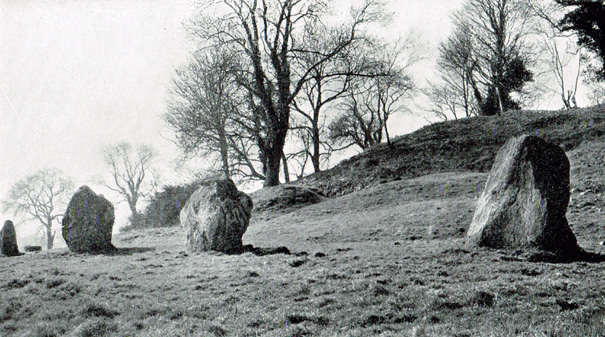
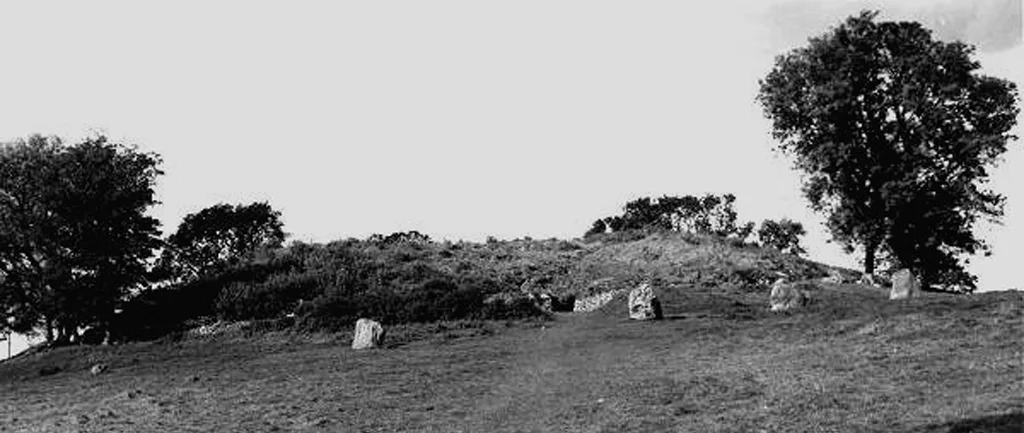 Newgrange before the excavations of the 1960s.
Source:
Newgrange through the ages.
Newgrange before the excavations of the 1960s.
Source:
Newgrange through the ages.
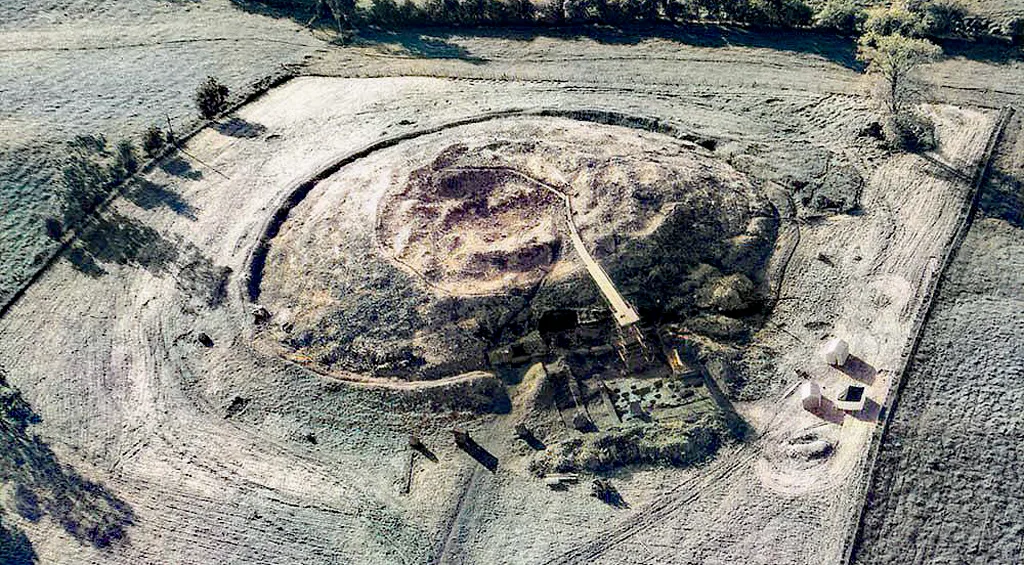 Excavations at Newgrange in the early 1960s. Photograph: Leo Swan.
Source:
Newgrange through the ages.
Excavations at Newgrange in the early 1960s. Photograph: Leo Swan.
Source:
Newgrange through the ages.
More Newgrange photographs and images of Newgrange.